Tyre pressure is the cheapest maintenance there is, and one of the most neglected. Most tyres lose a little air every month without any puncture, so a car that hasn't been checked in a while is very likely running soft. That costs you fuel, grip and tyre life.
Where to find the right pressure
- A placard on the driver's door frame — the most common place.
- Inside the fuel filler flap, on some cars.
- The owner's manual.
Don't use the number moulded into the tyre's sidewall. That's the maximum the tyre can safely hold, not the pressure your car should run. The placard often gives two figures, one for normal driving and a higher one for a full load or towing. In New Zealand it's usually shown in kPa, often alongside psi. One psi is about 6.9 kPa.
How to check it properly
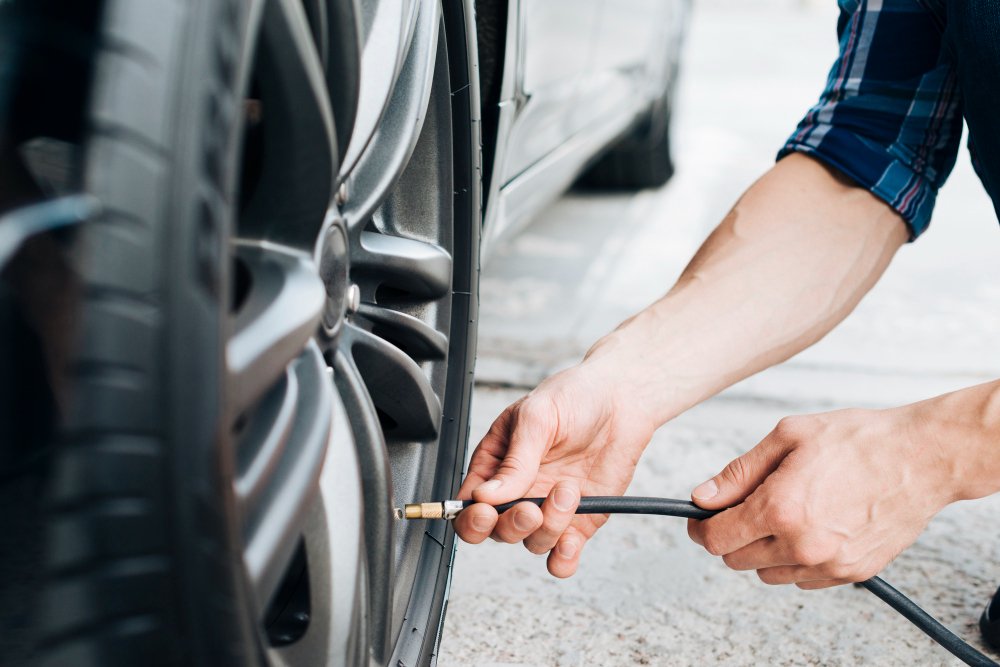
- Check when the tyres are cold — before driving, or after the car has sat for a few hours. Warm tyres read higher.
- Use a decent gauge. Forecourt gauges vary, so a cheap gauge of your own gives you a consistent reading.
- Check all four, and the spare if you have one.
- Do it once a month, and before a long trip or towing.
What getting it wrong does
- Too low — the tyre flexes and runs hot, wears on both shoulders, uses more fuel and steers less precisely. Badly underinflated tyres can fail.
- Too high — less rubber touches the road, so grip drops, especially in the wet. The centre of the tread wears faster and the ride gets harsh.
If it keeps dropping
One tyre that needs topping up more often than the others is telling you something: a slow puncture, a leaking valve, or a poor seal between the tyre and a corroded rim. All three are usually simple fixes, and a puncture caught early is far more likely to be repairable than one that's been driven on soft. If your car has a tyre pressure warning light and it comes on, check the pressures as soon as it's safe to.
We check tyre pressure and condition as part of every service. If a tyre keeps losing air, call in to 151 Totara Street, Mount Maunganui, and we'll find out why. Call +64 29 777 7122.